CSG SECURITY INSIGHTS

Find all the latest CSG Security news and insights below.

Security Technology Solutions for Commercial Properties

Security technology solutions are becoming increasingly important for commercial properties. According to the South African Police Service’s 2025/2026 crime statistics, 10,918 cases of burglary at non-residential premises were recorded in the October to December 2025 quarter, reinforcing the need for commercial properties to take a more structured approach to CCTV, alarms, access control and monitoring. Amid rising pressure on tenant safety, business continuity, and asset protection, many organisations are now investing more heavily in integrated security infrastructure across their commercial environments. From office parks and retail centres to warehouses, logistics facilities and industrial sites, businesses are rethinking how they protect people, property and operations. Modern commercial security is no longer limited to a guard at the gate or a few standalone cameras. Today’s environments require layered protection systems that improve visibility, strengthen access management, support faster incident response and create greater operational control across large or complex sites. For many businesses, however, security terminology can quickly become overwhelming. CCTV systems, alarms, access control, remote monitoring and integrated platforms are often discussed together, even though each serves a different purpose within a broader commercial security strategy. Understanding how these security technology solutions work together helps businesses make more informed decisions around risk management, safety, and long-term operational resilience. Why Security Technology Solutions Have Evolved for Commercial Properties Commercial properties have changed significantly over the past decade. Businesses now operate across larger physical footprints, hybrid work environments, multiple entry points, remote operations and increasingly connected digital systems. At the same time, criminal activity targeting commercial environments has become more organised and opportunistic. As a result, many traditional security approaches no longer provide sufficient coverage on their own. This is where security technology solutions become essential. Modern commercial systems are designed not only to detect incidents, but also to improve prevention, visibility and
Read More
Integrated security solutions

Integrated Security Solutions: Why CCTV Monitoring and On-Site Guards Work Better Together

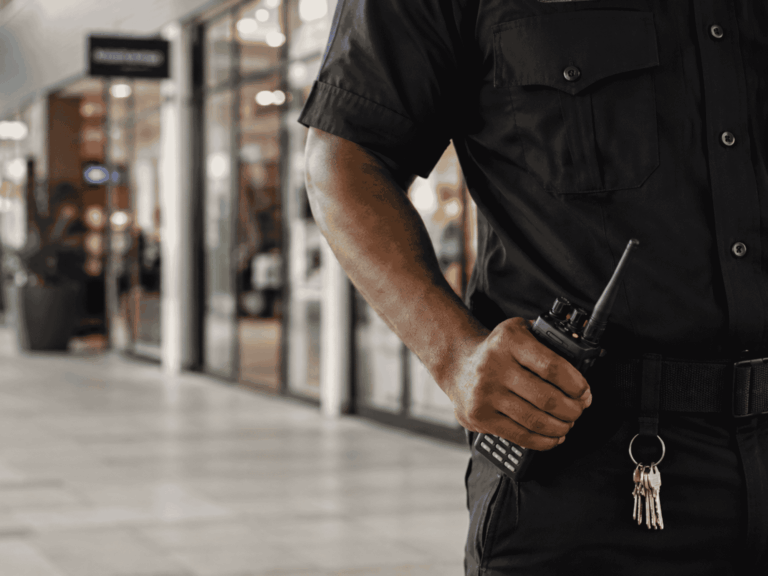
For many South African businesses, integrated security solutions are no longer optional. Security is not just about choosing between CCTV monitoring and on-site guards. It is about building a coordinated plan that improves visibility, strengthens response, protects staff and assets, and supports day-to-day operational control. According to the Private Security Industry Regulatory Authority’s 2023/24 Annual Report, South Africa’s private security sector includes hundreds of thousands of active security officers and thousands of registered security businesses, with private security personnel significantly outnumbering SAPS police members. For businesses operating in commercial, industrial, logistics, retail, warehousing and office environments, this highlights the scale and importance of private security in managing modern risk. Today’s security risks are more complex than any single solution can effectively manage. Theft, vandalism, unauthorised access, organised criminal activity and internal vulnerabilities require a layered approach. This is why the strongest security plans combine manpower, technology, and processes into a single coordinated model. CCTV monitoring provides visibility. On-site guards provide judgement and physical response. When these elements work together, businesses gain more than surveillance or presence. They gain a smarter, more responsive security environment. Understanding Integrated Security Solutions Integrated security solutions bring together different security measures into a single planned and managed system. Instead of treating CCTV, guards, alarms, access control and reporting as separate services, an integrated approach connects them around a clear risk profile. In practical terms, this means your security plan may include: CCTV surveillance and remote monitoring On-site guarding and patrols Access control systems Perimeter protection Control room integration Incident escalation procedures Visitor and contractor management Risk assessments and site audits Reporting, monitoring and response protocols The goal is not simply to place cameras on a wall or guards at an entrance. The goal is to understand where the business is vulnerable and then apply the

Read More
How will the fuel shortage affect commercial security?

How will the fuel shortage affect commercial security in South Africa’s logistics environment?

In the wake of steep petrol hikes, many are asking: “How will the fuel shortage affect commercial security?”  According to the South African Police Service, cargo theft is a persistent reality across our country, with thousands of incidents reported each year, and those numbers tend to rise when supply chains lose their structure and movement becomes harder to predict. Fuel shortages create this kind of situation. Plans start to change, and things that were once under control become uncertain. Fuel shortages also do more than slow down logistics. They change how cargo moves, where it stops, and how exposed it is along the way. For businesses moving high-value goods, the question of fuel shortages and security becomes central to daily operations. When routes become less predictable Logistics relies on a steady rhythm, planned routes, known refuelling points, and predictable movement. This planning helps security teams work with accuracy and confidence. Fuel shortages disrupt this rhythm in ways that may not be obvious at first, but soon become clear as operations continue. Vehicles begin moving based on fuel availability rather than following a set plan. Drivers may have to take detours to find fuel, sometimes passing through unfamiliar areas without prior risk checks or support. Planned stops become longer and more unpredictable, with vehicles waiting at stations or along the road for extended periods. These changes make the journey less predictable. Cargo is more visible, stops last longer, and travel patterns are harder to follow. This creates opportunities for both opportunistic and organised crime. Why delays increase cargo exposure Fuel shortages cause delays across the entire logistics process. What is usually a smooth journey now happens in stages, with more pauses, delays, and changes along the route. Goods remain in transit for longer periods, and with every delay comes another moment

Read More
Private security vs state security

Understanding the Landscape: Private Security vs State Security in South Africa

Private security vs state security is a topic many people still question. South Africa’s private security industry is among the largest in the world. In this blog, we break down the key differences to help businesses stay secure and operational. The Private Security Industry Regulatory Authority reports that there are more than 500,000 active registered security officers, which is more than the number of personnel in the South African Police Service. This scale affects how people experience security every day. For businesses, it shapes how protection is organised, how risks are managed, and how different types of security work together. The discussion around private security vs state security often comes down to understanding these layers clearly, not as competing forces, but as distinct roles shaped by law, responsibility, and context. Private security and state security are two systems operating in parallel To understand the difference between private security and state security, it is useful to begin with their mandates. State security, led by SAPS, enforces the law, prevents crime, and conducts investigations. Its authority covers the whole country, and its role is set by the Constitution and criminal law. Private security has a different mandate. It is hired to protect specific locations such as commercial properties, logistics operations, industrial sites, and residential estates. Its main focus is prevention, visibility, and quick response within those areas. Both work in the same country and sometimes in the same locations, but their responsibilities are set up differently from the start. What the law allows with private security vs state security At the centre of both private and state security is legal authority. Private security officers are regulated by PSIRA, which sets rules for training, conduct, and compliance. Their powers are mostly the same as those of any private citizen, with some specific extensions

Read More
Access control security

5 Reasons to Invest in Access Control Security

Access control security is the smartest initial step for organisations aiming to upgrade their office security measures. By installing an electronic access control system, you gain control over who comes in and out of your premises – a powerful way to reduce risk and prevent crime. If you’re considering an access control solution for your business but still need a bit more convincing, here are five clear benefits. 1. Seamless Installation and Integration Modern access control systems are relatively straightforward to set up – and with CSG Security handling the process, it’s completely hassle-free. With access control security, you can: Customise authorised access by person, department or time of day Easily manage who can enter which areas Use convenient methods like cards, tags or PIN codes that employees quickly get used to Another major advantage? You can track employee attendance and movements in and out of the office, giving you accurate, automated time-entry records that are far more reliable than manual sign-in sheets. 2. Security at Multiple Access Points Criminals look for low-risk, high-reward opportunities. A building with open, uncontrolled entry points makes their job easier. An access control security system: Restricts access to your building and key internal areas Acts as a visible deterrent to opportunistic crime Makes it harder for intruders to get in – and just as importantly, to get out quickly When criminals know they may be recorded, logged or blocked at controlled access points, they’re far less likely to target your business. 3. Reduces Employee Theft Not all security threats come from outside. Many employees work in areas that aren’t constantly supervised. Sometimes, theft happens simply because it’s easy and no one is watching. With electronic access control security, you can: Monitor who accesses specific rooms, storerooms or high-value areas Review logs after any incident

Read More
Access control and POPIA compliance

Access Control and POPIA Compliance: Why It Matters for Your Business

In today’s digital age, access control and POPIA compliance need to be at the centre of how businesses think about outsourced security services. Data security has become a critical concern for companies and individuals alike, and access control systems sit right where people, premises and personal information intersect. As the volume of personal information being processed and stored grows, the need to protect data privacy and maintain client trust has become paramount. South Africa’s Protection of Personal Information Act (POPIA) was introduced to regulate how personal data is processed and to enforce strict data protection measures across all sectors. The Importance of Access Control and POPIA Compliance While some businesses still see POPIA as a box-ticking legal requirement, it’s much more than that. Access control and POPIA compliance together represent ethical business practice – respecting people’s fundamental right to privacy and treating their information with the same care as their physical safety. As responsible professionals, we need to: Collect and store only the personal information we genuinely need Handle that information securely and confidentially Be transparent about how it’s used and who has access In the context of access control, that means every scan, sign-in, licence plate, ID or biometric record must be managed in a way that supports compliance, not undermines it. The Impact of POPIA Non-Compliance Non-compliance with POPIA can have far-reaching consequences for both businesses and their clients. The Information Regulator can impose substantial fines, and in serious cases, there can even be criminal liability for responsible individuals. Beyond legal penalties, weak data protection can lead to: Data breaches and unauthorised access to personal information Loss of customer trust and damaged reputation Contract losses when clients demand compliant providers Costly incident response, investigations and potential lawsuits For many organisations, the reputational damage from a data breach is

Read More
Modern access control systems

All You Need to Know About Access Control Systems

Security is an aspect of business that more and more companies are taking seriously, and modern access control systems – especially those with digital and cloud-based capabilities – are fundamental to minimising risk. Thoughtful security protocols create restricted areas and protect people, property and assets. Physical barriers prevent people from inadvertently entering sensitive environments or spaces containing hazardous materials and equipment, and help protect organisations from vandalism, theft and trespassing. Access control is especially useful in facilities that require higher levels of security and accountability. For many small businesses, security is often an afterthought. But as companies grow, the stakes get higher. They start to consider improved security, run risk assessments and form a plan. A key part of that plan is deciding which access control systems and physical security controls to use. What Is Physical Access Control? In simple terms, physical access control creates barriers that prevent unauthorised people from entering your workplace or specific secure spaces within your facility. It’s the backbone of physical security: a combination of physical barriers, authority rules and authorisation plans that allow the right people in – and keep everyone else out. Physical Security Access Control Systems Physical access is typically managed via a dedicated access control system that combines software, hardware, and locking mechanisms. For example: Software and hardware integrated with electronic door locks A central database defining which users have access to which areas (rooms, equipment, vaults, gates, etc.) Rules that control when and where different credentials will unlock doors and other entry points Over time, security has moved away from traditional keys and even basic access cards and tags toward network-based, cloud-managed solutions. Modern systems: Are managed via a network or in the cloud Allow you to assign different access levels to different doors and zones Let you revoke or

Read More
Are security cameras an effective security plan?

Are Security Cameras an Effective Security Plan?

Many South African business owners are asking themselves, “Are security cameras an effective security plan?” as crime continues to rise and security risks become harder to ignore. Before exploring the benefits of security cameras, it’s important to put crime and security into perspective. South Africa’s high crime rate puts constant pressure on both businesses and households, and commercial properties remain prime targets. Criminals are increasingly bold and sophisticated, which means business owners and property managers need to regularly strengthen and review their security plans. You can’t prevent every possible break-in, but you can take practical steps to protect assets and limit damage when incidents occur. That’s where a clear security strategy becomes crucial. If you haven’t already, now is the time to put an integrated security game plan in place. Prioritising Security Business crime is expensive. It erodes profits, disrupts operations and can be especially difficult for smaller companies to recover from. Security camera systems are a cost-effective way of reducing these risks and should be considered as part of a layered security plan – not as the only measure, but as a key component. A comprehensive security plan can also help reduce insurance risks, liabilities and other hidden costs associated with crime. The starting point should always be: Conducting a risk assessment Identifying vulnerabilities Developing a realistic, phased security plan Reviewing that plan regularly A multi-faceted approach is recommended so that your property is covered from all angles (literally and figuratively). This is a step-by-step process and won’t necessarily be achieved in one go. Common security mechanisms that can form part of this plan include: Closed-circuit television (CCTV) / security cameras On-site or off-site monitoring via a 24/7 control room Alarm systems linked to armed response Access control solutions Intercom systems Electric fencing Guarding and patrolling services External security

Read More
Benefits of Off-Site Monitoring for Your Business

Benefits of Off-Site Monitoring for Your Business

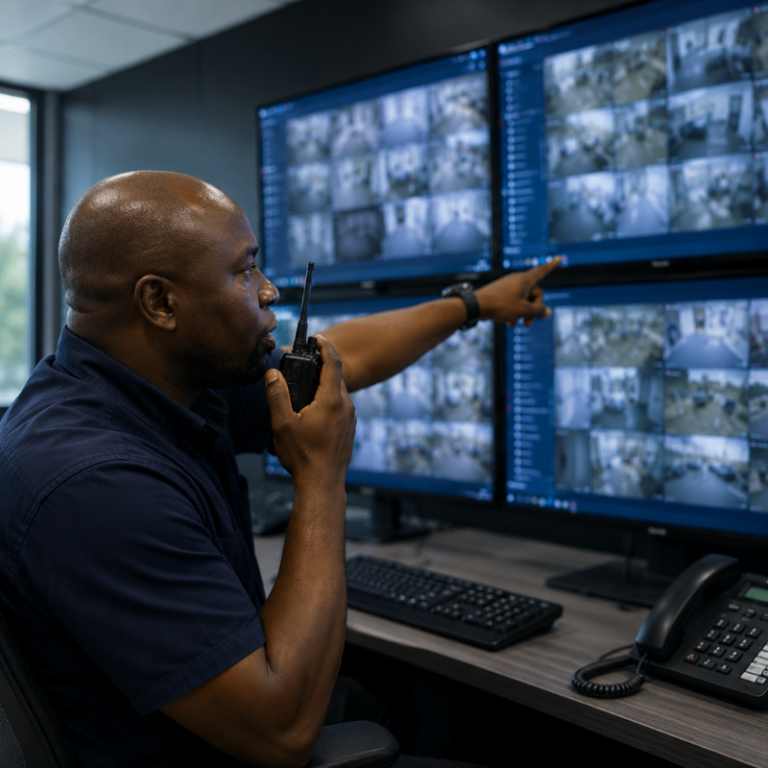
In modern security, off-site monitoring has become one of the most effective ways to protect commercial properties. Instead of relying solely on traditional measures such as guards, booms, high walls, and manual gate control, off-site monitoring uses technology, cameras, and a professional control room to actively watch over your site – often stopping incidents before they happen. Below, we unpack how off-site monitoring works and why it’s such a powerful addition to your security strategy. Off-Site Monitoring vs On-Site Only Security There’s been a long-running debate in the security industry about whether remote monitoring or on-site guarding is more reliable. The truth? You don’t have to choose one or the other – but off-site monitoring solves a lot of the weaknesses of a “guards-only” approach: Human error risk – Guards can get distracted, overwhelmed, or make mistakes. Cost – Full-time guarding at multiple points is expensive month after month. Perception – Guards can either reassure clients… or intimidate them. In some cases, guards themselves may be involved in incidents, which erodes trust. Off-site monitoring reduces these risks by putting trained operators in a secure control room with full visibility of the site via cameras and integrated systems. 1. Better Coverage and Customised Rules With off-site monitoring, cameras and sensors are placed to give a full view of your property – not just the entrance. The system can be configured to: Watch specific high-risk zones Trigger alerts when there’s movement in defined areas Apply different rules at different times (after-hours vs business hours) This gives you active, rules-based surveillance, rather than relying on someone to be looking in the right direction at the right time. 2. Lower Operational Costs The initial capital outlay for an off-site monitoring system is often more affordable than people expect – but the real saving lies

Read More